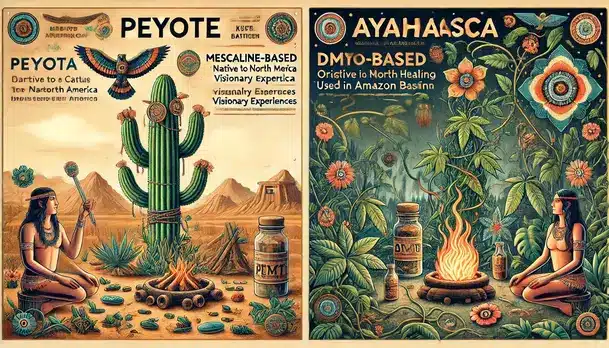
Ayahuasca and peyote are both sacred plant medicines with deep roots in indigenous tradition. Both alter consciousness, both are used ceremonially, and both carry profound spiritual significance. But they are not the same, and understanding the differences matters before you consider either path.
Important note: Different traditions have their own unique ways of conducting these ceremonies. This is a general overview, your experience can vary significantly depending on who is facilitating and which tradition they carry. Nothing can fully prepare you for your own ceremony. Have open conversations with the facilitators you choose to work with and make your own informed decision.
Overview of differences between Ayahuasca and Peyote
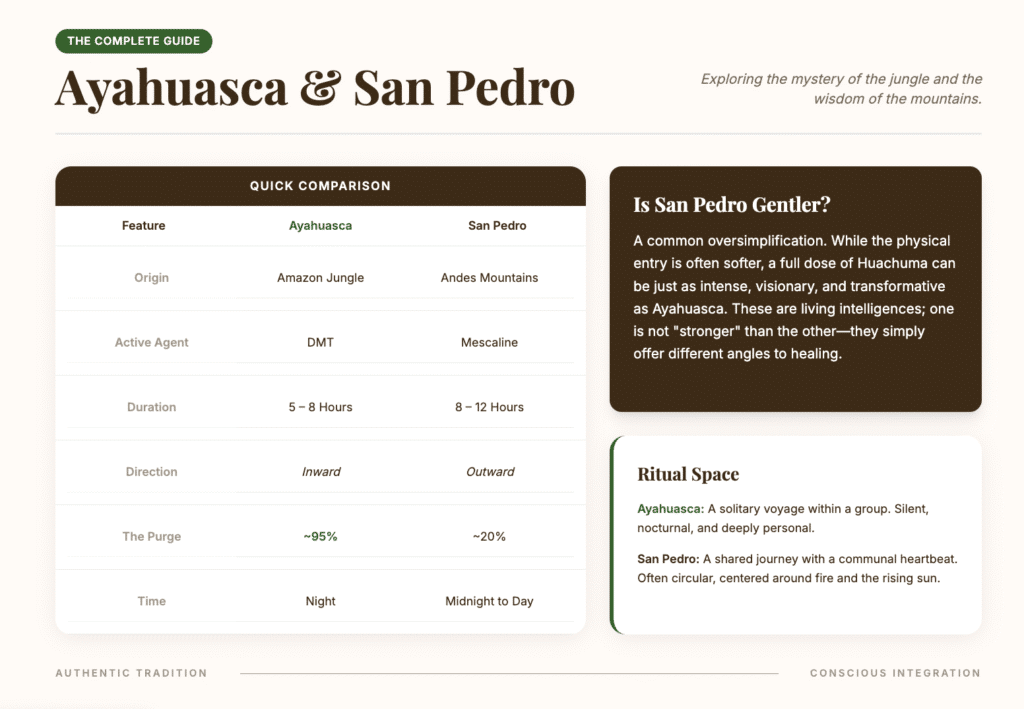
| Ayahuasca | Peyote | |
|---|---|---|
| Origin | Amazon rainforest, South America | Chihuahuan Desert, Mexico and southern US |
| Active compound | DMT (dimethyltryptamine) | Mescaline |
| Form | Brewed drink (vine + leaves) | Cactus buttons, chewed or as tea |
| Duration | 5–8 hours | 12–14 hours |
| Intensity | Stronger, more visionary | Gentler, more grounding |
| Purging | Common | Rare |
| Ceremony style | Individual inner journey | Communal, structured, prayer-led |
| Legal status (Colombia) | Legal | Not applicable |
Is Peyote the Same as Ayahuasca?
No. Peyote and ayahuasca are not the same medicine, and in a way they are not even the same kind of thing. One is a small cactus that grows in the Mexican desert and carries mescaline. The other is a brew from the Amazon, made from a vine and a leaf, and it carries DMT. So already the plant, the place, and the molecule are different.
The ceremony is also different. Peyote is communal, sat around a fire, prayer-led, and it can keep on going for twelve hours or more. Ayahuasca is more of an inner journey in the dark, usually five to eight hours. People ask this a lot because both get called sacred plant medicine and both can bring up heavy material. But the shape of the experience is less about a shared label and more about which spirit you are actually sitting with.
If you want the side by side, the table above lays out the practical differences in one view.
Looking to attend a Ceremony? Book a free 30-minute phone call.
Origins and cultural roots
What is ayahuasca?
Ayahuasca is a sacred brew from the Amazon basin, made from the Banisteriopsis caapi vine and the leaves of Psychotria viridis (chacruna). The vine contains MAO inhibitors that allow the DMT in the chacruna leaves to become orally active. In Colombia, ayahuasca is also known as yagé, a name carrying its own distinct lineage, tended for generations by the Kamentsa and Inga peoples.
For a deeper dive into Ayahuasca, its history and how it works, read our full guide on “What is Ayahuasca.”
What is peyote?
Peyote (Lophophora williamsii) is a small, spineless cactus native to the Chihuahuan Desert of Mexico and the southern United States. It contains mescaline as its primary psychoactive compound, one of over 60 alkaloids in the plant. It has been used for thousands of years by Native American tribes including the Huichol, Tarahumara, and members of the Native American Church.
Unlike ayahuasca, peyote grows extraordinarily slowly, 15 to 25 years to reach maturity. This makes it scarce and increasingly endangered. Its collection is prohibited except for traditional indigenous use.
How are they viewed spiritually?
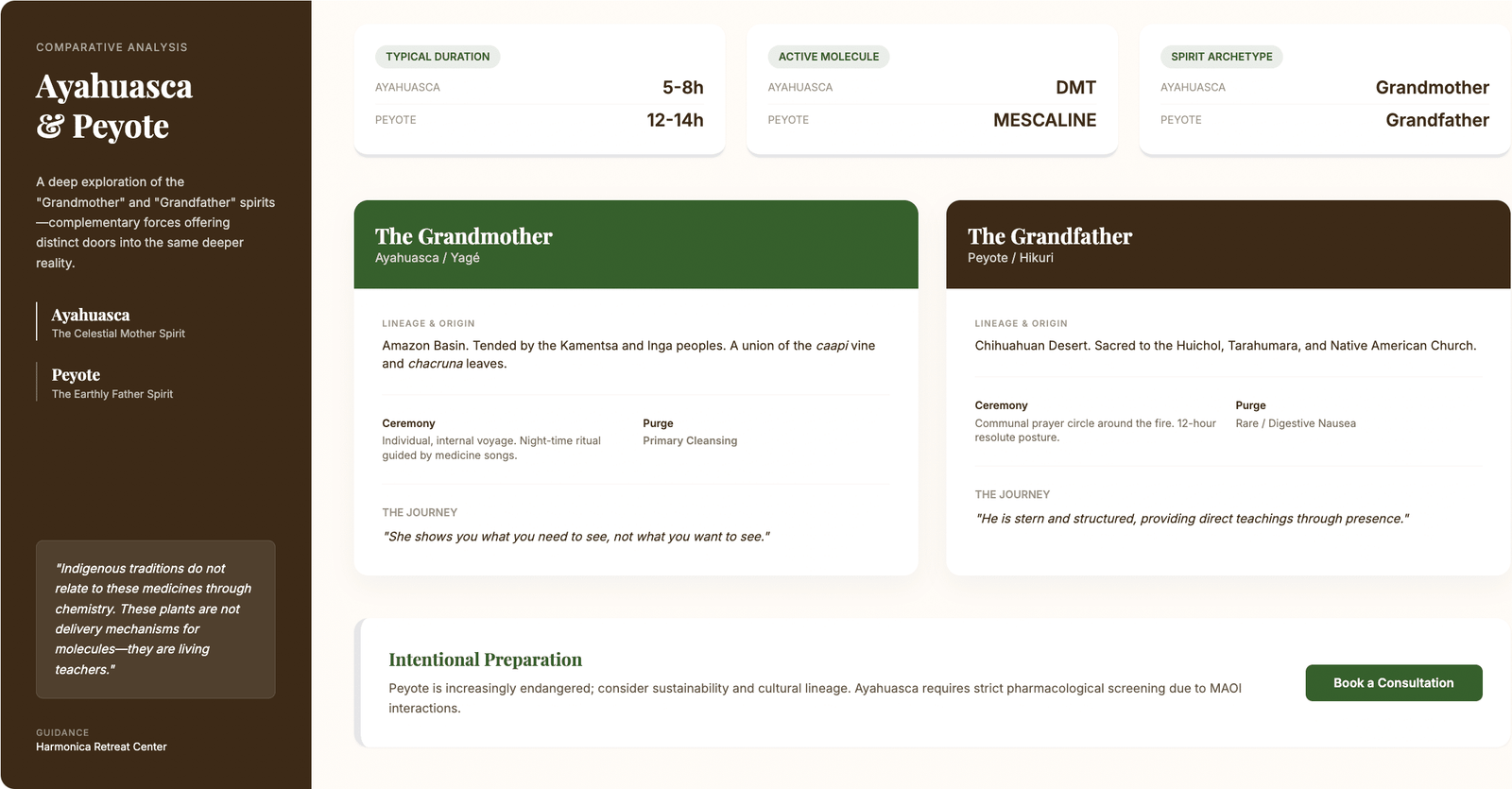
Ayahuasca is known as the Grandmother spirit, gentle, allowing, guiding participants through their inner world. Peyote is the Grandfather, stern, structured, grounding in its teachings to those who meet him. They are seen as complementary forces, each offering a distinct door into the same deeper reality.
Active compounds: DMT vs mescaline
What is DMT and how does it work?
DMT (dimethyltryptamine) is the primary psychoactive compound in ayahuasca. On its own it is broken down rapidly in the digestive system before reaching the brain. The Banisteriopsis caapi vine solves this by providing beta-carbolines, natural MAO inhibitors that allow the DMT to become orally active, producing an experience lasting four to six hours. DMT acts on the brain’s 5-HT2A serotonin receptors, producing vivid visions, deep emotional processing, and what many describe as contact with plant intelligences or spiritual dimensions.
What is mescaline and how does it work?
Mescaline is the primary psychoactive compound in peyote. Like DMT it acts on 5-HT2A serotonin receptors, but unlike DMT it is orally active on its own, no additional plant is needed. Effects begin two to four hours after ingestion and last 12–14 hours.
A word on reducing plants to their chemistry
Indigenous traditions, the Huichol, the Kamentsa, the Yawanawá, do not relate to these medicines through chemistry. These plants are not delivery mechanisms for molecules. They are living intelligences with their own spirit and wisdom.
When science reduces ayahuasca to DMT or peyote to mescaline, something important gets lost. Peyote contains over 60 alkaloids. Ayahuasca contains more than 10 beyond the most commonly discussed compounds. Even the full scientific picture is more complex than the headline molecules suggest, and still does not capture what indigenous peoples mean when they say these plants teach and heal.
The ceremony experience
What happens in an ayahuasca ceremony?
An ayahuasca ceremony takes place at night. Participants drink the brew and then lie down or sit in a darkened ceremonial space while the facilitator sings icaros, healing songs, to guide the experience. The journey is largely internal and individual. While participants are physically together, each person moves through their own process, guided by the medicine.
For a full picture of what an Ayahuasca ceremony is like, read our guide on “What to expect in an Ayahuasca ceremony“
What happens in a peyote ceremony?
Peyote ceremonies are structured very differently, communal, prayer-led, and built around collective participation. Participants sit in a circle around a sacred fire for the duration of the night.
The physical discipline demanded is striking. Participants sit upright for the entire ceremony, up to 12 hours, without a backrest. This posture is said to be symbolic: likened to galloping on horseback across the landscapes of Mexico, embodying a strong and resolute stance. Maintaining it for twelve hours is genuinely demanding.
Specific protocols govern entering and leaving the circle. There is a saying that the ceremony leader needs to be “good with his words”, because the words spoken carry significant weight for everyone present.
A friend who attended a peyote ceremony shared a teaching from the tribe leader about water. The leader described water as an advanced technology, essential not only for our bodies but for the entire web of life. Such teachings are a reminder of what we take for granted and of our interconnectedness with the natural world.
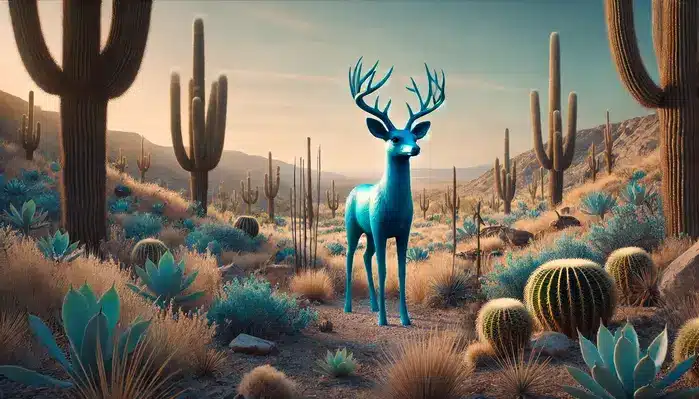
The Blue Deer holds deep spiritual significance in Huichol tradition. The deer is the guide between worlds, the being that first showed the Huichol where to find peyote in the desert. To encounter the Blue Deer in ceremony is considered a profound blessing.
Duration: how long does each last?
Ayahuasca effects begin 30–60 minutes after drinking and last five to eight hours. Peyote effects begin two to four hours after ingestion and last 12–14 hours. A peyote ceremony is roughly double the duration of an ayahuasca ceremony, and the physical commitment of sitting upright throughout adds a layer of challenge that should not be underestimated.
After the peyote ceremony: the Temazcal
It is common after a peyote ceremony to participate in a Temazcal, a traditional sweat lodge, to close the ceremonial container. The Temazcal represents the womb of Mother Earth, offering participants a space to be cleansed and symbolically reborn after their journey with the Grandfather medicine.
The ritual typically involves four “doors”, rounds during which the lodge is briefly opened to bring in fresh air and new volcanic stones. Water is poured over the heated stones to create steam, intensifying the heat inside. Participants share songs and prayers throughout, creating a collective atmosphere of integration and gratitude. For many, the Temazcal is where the teachings of the peyote ceremony begin to settle into the body.
Mescaline vs DMT: How Peyote and Ayahuasca Compare Chemically
Peyote works through mescaline and ayahuasca works through DMT, and the two molecules behave very differently in the body. Both act mainly on the same serotonin receptor, the 5-HT2A, so on paper they look like cousins. But how they reach the brain is not the same.
DMT on its own gets broken down in the stomach before much reaches the brain, so ayahuasca needs the vine, which carries natural MAO inhibitors that keep the DMT active. You can read more on how ayahuasca compares to pure DMT in our separate guide. Mescaline does not need any of that. It is orally active on its own, it comes on slower, and it stays for a lot longer.
There is also one more thing worth saying. Mescaline is not only in peyote. San Pedro, also called huachuma, carries the same molecule and grows much faster. So when somebody searches for mescaline versus ayahuasca, the answer depends on which mescaline cactus they actually mean.
| Ayahuasca | Peyote | |
|---|---|---|
| Active compound | DMT (dimethyltryptamine) | Mescaline |
| Main brain target | 5-HT2A serotonin receptor | 5-HT2A serotonin receptor |
| Orally active on its own | No, needs the vine’s MAO inhibitors | Yes |
| Onset | 30–60 minutes | 2–4 hours |
| Typical duration | 5–8 hours | 12–14 hours |
| Also found in | Chacruna and other DMT plants | San Pedro (huachuma), Peruvian torch |
“This upright posture is said to be symbolic, likened to galloping on horseback across the landscapes of Mexico”
Effects and intensity
Ayahuasca is known for intense visual and emotional experiences, vivid inner journeys, emotional release, purging, and profound encounters with what needs to be faced. The medicine tends to show you what you need to see, not what you want to see. The ceremonial space becomes secondary to the journey happening within you.
Peyote produces a different quality. More grounding, more stimulating, more present-focused. It connects participants with the fire, the community, the natural world, rather than taking them inward to visionary realms. Peyote ceremonies are interactive and co-creative; the medicine asks for participation rather than surrender.
Ayahuasca is generally considered more intense, particularly in visionary and emotional depth. But peyote intensity is highly dose-dependent. At higher doses it can be equally profound. The more useful distinction is qualitative: ayahuasca takes you inward with force; peyote keeps you present and grounded.
Purging, vomiting or other physical release, is common in ayahuasca and considered a natural part of the cleansing process. Peyote is generally associated with less purging, though nausea can still occur.
Scientific research on ayahuasca and peyote
Clinical and observational research over the past two decades has shown that both ayahuasca and mescaline-containing plants can produce measurable psychological benefits, including reductions in depression, increased life satisfaction, and lasting changes in perspective. A 2019 randomised controlled trial by Palhano-Fontes et al. found rapid antidepressant effects after a single dose of ayahuasca. A 2016 systematic review by dos Santos et al. found psychedelics including ayahuasca demonstrated antidepressant, anxiolytic, and anti-addictive effects. For peyote, a 2013 population study by Krebs and Johansen found mescaline use associated with decreased psychological distress, and a 2021 study by Davis et al. found naturalistic mescaline use associated with enduring positive life changes and increased psychological flexibility.
At the same time, both substances act primarily on serotonin receptors and carry real risks, particularly when combined with medications or used without proper screening.
Safety and contraindications
Both medicines are considered physiologically safe when used responsibly with proper screening. Both can produce psychologically intense experiences that require a safe container and experienced facilitation.
Ayahuasca is contraindicated for people with a history of psychosis or schizophrenia, certain heart conditions, epilepsy, and those taking SSRIs, MAOIs, or other psychiatric medications. The MAOI content of ayahuasca creates serious interaction risks, combining it with antidepressants can cause serotonin syndrome, a potentially life-threatening condition requiring a medical wash-out period of several weeks, as documented in psychiatric pharmacology literature and the Mayo Clinic.
Peyote shares many of the same contraindications. The 12–14 hour duration also places additional physical demands on participants, making it unsuitable for those with mobility limitations or conditions that make sitting upright for extended periods dangerous.
At Harmonica Retreat, every participant undergoes thorough medical screening before ceremony. If you are on any prescription medication, consult a qualified medical professional before considering either medicine.
For a full breakdown of medical and psychological contraindications, see our guide on “Who should not do Ayahuasca“
Legality
Ayahuasca is legal in Colombia, where it is recognised as part of the country’s indigenous cultural heritage. In most other countries, including the US, UK, and EU, it is a controlled substance due to its DMT content, though some religious organisations have obtained legal exemptions.
Peyote is a Schedule I controlled substance in the US, with a legal exemption for members of the Native American Church under the American Indian Religious Freedom Act of 1978. In Mexico, its use is legally protected for indigenous communities. Laws vary significantly by country, always research your specific location before considering a peyote ceremony.
Which is right for you?
This is not a question with a universal answer. After 13 years of facilitating ayahuasca ceremonies, these are the questions worth sitting with.
What is drawing you to peyote specifically? If the answer is a genuine, sustained calling, a feeling that the Grandfather medicine is speaking to you directly, that is worth honouring. If the answer is general curiosity about plant medicine, peyote may not be the most natural starting point. In that case, the more useful question becomes: ayahuasca or San Pedro?
Consider the sustainability question honestly. Peyote is endangered. Demand from the global spiritual community has placed real pressure on wild populations. If you are located near communities in the US or Mexico where peyote ceremonies are culturally embedded, the connection is more natural. If you are travelling from elsewhere driven by general curiosity, consider whether San Pedro, a faster-growing mescaline plant with its own rich tradition, serves the same call without the same ecological cost.
Consider what kind of experience you are seeking. If you want a communal ceremony built around shared prayer and collective healing, peyote and San Pedro both offer that. If you are seeking a deep individual inner journey, ayahuasca is more naturally suited.
Consider the physical commitment. Sitting upright for 12 hours without a backrest is not a small thing. Peyote asks for genuine physical discipline. Ayahuasca asks for surrender.
Ultimately, meditate on it. Ask which medicine is speaking to you, not which sounds most interesting or accessible. These are sacred medicines that respond to genuine intention. If you are unsure, that uncertainty is worth sitting with before committing to either path.
If you’re exploring plant medicines more broadly, we’ve written detailed comparison guides on “Ayahuasca & Magic Mushrooms“, “Ayahuasca & San Pedro (Wachuma)“, “Ayahuasca & Iboga“, and “Ayahuasca & Bufo Alvarius.“
If you feel called to ayahuasca and want to understand whether it is the right step for you, schedule a free 30-minute consultation with our team.
Conclusion
Ayahuasca and peyote are both profound plant medicines rooted in thousands of years of indigenous wisdom. They are different in nearly every practical dimension, compounds, ceremony, duration, physical demands, and the cultures that carry them. Understanding those differences is not just useful. It is part of the respect these medicines deserve.
Take your time. Let the medicine that is right for you find you.
“Due to the slower growth and limited availability of Peyote, there is a strong belief that one should feel a deep calling before engaging with Peyote”
FAQs around Ayahausca and Peyote
Is Peyote the same as Ayahuasca?
No. Peyote is a cactus containing mescaline, native to Mexico and the southern US. Ayahuasca is a brew made from two Amazonian plants containing DMT. They are distinct in origin, chemistry, and ceremony.
What is the difference between Peyote and Ayahuasca?
Active compound (DMT vs mescaline), origin (Amazon vs Mexican desert), duration (5–8 hours vs 12–14 hours), ceremony style (individual inner journey vs communal prayer circle), and intensity (ayahuasca is generally more visionary). See the comparison table above.
Which is stronger, peyote or ayahuasca?
Ayahuasca is generally more intense, particularly in visionary and emotional depth. Peyote intensity is dose-dependent, at higher doses it can be equally profound. The distinction is more qualitative than a simple measure of strength.
How long does Peyote last compared to Ayahuasca?
Peyote lasts 12–14 hours, with effects beginning 2–4 hours after ingestion. Ayahuasca lasts 5–8 hours, beginning 30–60 minutes after drinking.
What is mescaline and how is it different from DMT?
Both act on serotonin receptors but produce different experiences. DMT acts quickly and intensely, producing profound extraordinary state of consciousness. Mescaline acts more slowly, lasts longer, and tends to be more grounding and present-focused. DMT requires MAO inhibitors to be orally active; mescaline is active on its own.
Can you combine peyote and ayahuasca?
This is not advisable and not a traditional practice. Both are psychologically intense. The MAOI content of ayahuasca creates interaction risks with other psychoactive substances. Work with one medicine at a time, with experienced facilitators, and allow adequate integration time between experiences.
What does a peyote high feel like?
A peyote experience is often described as warm, grounded, and emotionally reflective, with visual patterns and a slow build over many hours from its mescaline content. Nausea early on is common. The tone is frequently reported as gentler than ayahuasca, though intensity varies by dose and person.
Do you smoke peyote or drink it?
Peyote is eaten as fresh or dried cactus buttons or brewed into a bitter tea, and it is not smoked. The mescaline is absorbed through digestion, which is why effects take longer to begin than with smoked substances.
Does peyote make you vomit?
Peyote commonly causes nausea and vomiting, especially early in the experience, much like the purging associated with ayahuasca. Many traditions view this as part of the cleansing process. Our guide to ayahuasca purging explains why this happens.
Is it illegal to own a peyote plant?
In the United States, peyote is a Schedule I substance and illegal to possess, with a specific exception for members of the Native American Church. Laws differ by country, so anyone considering it should check local regulations. Cultivation carries the same restrictions as possession in most places.
Is ayahuasca a cactus?
No. Ayahuasca is a brewed drink, not a cactus. It is made from the Banisteriopsis caapi vine and the leaves of the chacruna plant. The cactus in this comparison is peyote, which is eaten as buttons or brewed into a tea. So if you are looking for a cactus, that is peyote or San Pedro, not ayahuasca.
Is San Pedro (huachuma) the same as peyote?
No, but they are close relatives. San Pedro, also called huachuma, is a fast-growing cactus that carries the same active compound as peyote, which is mescaline. Peyote grows extremely slowly and is endangered, while San Pedro grows quickly and is more widely available. Many people drawn to peyote find that San Pedro answers a similar calling with far less ecological cost.
Is yagé the same as ayahuasca?
Yes. Yagé is the name used in Colombia and parts of the Amazon for ayahuasca, the same brew of the vine and the chacruna leaf. The name carries its own lineage, tended for generations by peoples such as the Kamentsa and Inga, but the medicine is ayahuasca.
How does peyote compare to DMT?
Peyote does not contain DMT at all. Its active compound is mescaline, while DMT is the compound in ayahuasca. Both act on the same serotonin receptor, but mescaline is orally active on its own and lasts much longer, around twelve to fourteen hours, while DMT in ayahuasca needs the vine to stay active and lasts five to eight hours.