A cacao ceremony is a gathering in which ceremonial cacao sits at the centre of the session. Ceremonial cacao is the whole cacao bean ground into a thick, bitter paste with no sugar and no milk. The person holding the space decides what happens around the drink, so two cacao ceremonies can have very different formats.
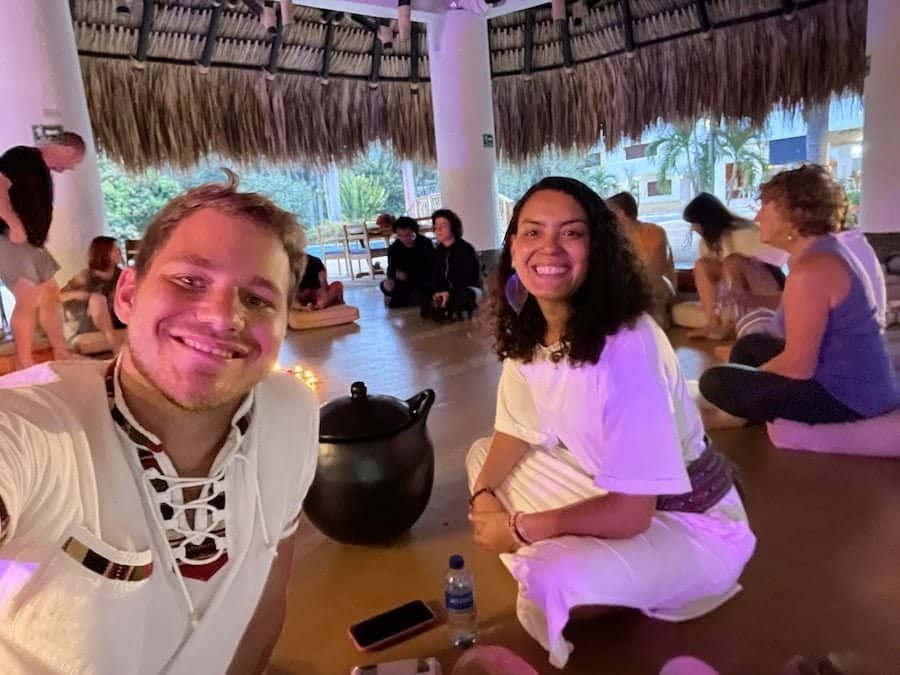
At Harmonica, we pair cacao with sound healing, and the full session lasts around two hours. The cacao is in the middle of it, obviously, but the drink can also be the smallest part of the evening in terms of time.
Because our cacao ceremonies are held with sound healing, it helps to know what a sound bath is before you come.
Looking to attend a Ceremony? Book a free 30-minute phone call.
Ceremonial Cacao Is Whole Bean Paste
Ceremonial cacao begins with the whole cacao bean ground into a paste. There is no sugar or milk in the cacao itself, and the result is bitter and thick.
This already clears up one common confusion. One person comes in thinking, “Hey, it’s basically hot chocolate in a nice room.” Another person hears the word ceremony and expects a dramatic altered state. Both people arrive with a level of expectation that may have little relationship to the cup in front of them.
A sweet drink made with milk or sugar does not match the definition used here. A drink based on cocoa powder also differs from whole-bean cacao paste. If an organiser uses the term ceremonial cacao, you can ask what is in the cup rather than guessing from the name.
| Detail | Ceremonial Cacao | Another Cacao or Cocoa Drink |
|---|---|---|
Base | Whole cacao bean ground into paste | Ask whether it uses whole-bean paste or cocoa powder |
Sugar | No sugar | Check whether sugar has been added |
Milk | No milk | Check whether milk has been added |
Taste and texture | Bitter and thick | Depends on the ingredients and preparation |
The word on the flyer tells you very little. Ask what the evening actually looks like before you commit.
The Person Holding the Space Shapes the Ceremony
A cacao ceremony has no single script that every organiser follows. The person holding the space chooses the surrounding practices and the amount of time given to each part.
For a cacao ceremony in Colombia, the country name alone also tells you little about the session. At Harmonica, cacao is paired with sound healing and lasts around two hours. You can read the details of our cacao ceremony in Medellín if that specific format interests you.
Before choosing another ceremony, ask concrete questions:
- What ingredients will be in the cup?
- How long will the full session last?
- What will happen besides drinking the cacao?
- Who should answer medical questions before the ceremony?
- What should you wear or bring?
The answers help you understand the container you are walking into. And by asking before you arrive, you reduce that level of unsureness that can otherwise become unnecessary expectation or anxiety.
Was It the Cacao, or Was It the Evening?
People say a lot of good things about cacao ceremonies. The question is what actually did it. The drink, the sound, the time away from your phone, and your own expectations can all shape how you describe the evening afterward.
It can be that you notice the stimulant effect of the cacao. It can also be that the sound healing gives you space to slow down. It can also be that you have a insight because you finally sat with a topic you had avoided for weeks.
That does not mean the evening was not real. It means you cannot hand the credit to the cacao. If an evening feels meaningful, that experience is real for the person having it. The experience does not prove that every feeling came from a compound in the cacao.
A ceremony can create time for a conversation with yourself. After that conversation, the homework remains yours. If you see that you need to call somebody, change a coping mechanism, or have a difficult conversation, the cacao cannot take responsibility for the action afterward.
Theobromine Gives Cacao a Long Tail
Theobromine is the main active compound in cacao. It is a stimulant related to caffeine, although the amounts and effects should not be treated as interchangeable.
The International Agency for Research on Cancer monograph on methylxanthines measured an average of 1.89 percent theobromine across eight commercial cocoa powder brands. The same monograph reports about 130 milligrams in a one-ounce bar of dark chocolate.
Cocoa carries roughly ten times more theobromine than caffeine. That ratio does not mean theobromine is ten times stronger. It describes the relative amounts found in cocoa.
Theobromine has a half-life of 6.1 to 10 hours in human serum. In practical terms, the concentration in serum takes that long to fall by half. This helps explain why the effect can have a long tail, even when the subjective feeling is not dramatic.
A 2013 study by Baggott and colleagues gave 80 people either 250, 500, or 1,000 milligrams of theobromine. The participants reported limited subjective effects at 250 milligrams. The higher doses produced worse mood, and heart rate rose as the dose increased.
So more cacao does not give you a better ceremony. In that study the higher doses gave people worse mood and a faster heart. The study also cannot tell you how much theobromine will be in a particular cup. You need the preparation details before making any comparison.
Antidepressant Questions Belong With Your Prescriber
Anyone taking an antidepressant or a monoamine oxidase inhibitor (MAOI) should ask their own prescriber before drinking ceremonial cacao. A facilitator or cacao brand cannot assess your medication history.
Cacao does contain beta-carbolines. Herraiz’s 2000 analysis of chocolate and cocoa measured them at 0.35 to 2 micrograms per gram. That amount is thousands of times below a dose that inhibits monoamine oxidase, so cacao is not an MAOI.
Still, “cacao is not an MAOI” does not answer every medication question. Antidepressants cover different drugs and individual situations. Your prescriber knows the medicine, dose, medical history, and other factors that an event organiser does not know.
There are also two types of people around this topic. One person gets scared by the words beta-carboline and cancels without asking anybody qualified. The other assumes that because it is natural, there cannot be a problem.
The same advice does not apply to either of them. Read more about antidepressants and plant medicine, then bring your exact medication details to your prescriber. Do not stop or change an antidepressant to attend a cacao ceremony unless your prescriber directs that change.
Some People Should Skip or Wait
A cacao ceremony is a poor fit for anyone expecting guaranteed healing from a drink. Cacao should also not be presented as treatment for depression, anxiety, trauma, or another diagnosed condition.
Wait before attending if you take an MAOI or antidepressant and have not spoken with your prescriber. The same applies if you have another medical concern and do not yet have guidance from somebody qualified to assess it.
You should also step away if an organiser dismisses a medication question with, “Hey, cacao is natural, so you’re fine.” Natural substances can contain active compounds. A responsible organiser can explain the session, but should hand medical decisions back to your own clinician.
And if you are looking to get high, this is the wrong room. Go do something else. Theobromine is a stimulant, and the available study data does not support promises of a dramatic intoxicating experience.
Preparing for a Cacao Ceremony
Good preparation starts with understanding the specific ceremony you are considering. Do not copy a preparation routine from a random event online and assume every organiser works in the same way.
Use a short checklist before you attend:
- Ask for the exact ingredients in the cup.
- Ask how long the session lasts and what happens around the cacao.
- Discuss antidepressants or MAOIs with your own prescriber.
- Choose clothes that let you sit comfortably for the time given by the organiser.
- Notice your expectation before arriving.
That last point sounds small, but it changes your relationship to the experience. If you arrive demanding a vision, emotional release, or instant answer, you may keep measuring the evening against an experience that nobody promised.
Another person may need the opposite advice. If you dismiss every gentle experience because nothing dramatic happened, you may overlook a quiet insight that becomes useful two days later. Give the evening a level of openness, and also keep your feet grounded around what the cacao can and cannot explain.
FAQs
What does a cacao ceremony do to you?
A cacao ceremony does not produce one predictable response in every person. The cacao contains the stimulant theobromine, while the organiser’s format and your own expectations can also influence how you experience the session. In the Baggott study, 250 milligrams of theobromine caused limited subjective effects. Higher amounts were associated with worse mood and a dose-dependent increase in heart rate. Those laboratory findings do not tell you the amount in a particular ceremonial cup.
Is ceremonial cacao legal?
A universal legal answer cannot cover every country or local jurisdiction. Ceremonial cacao is whole cacao bean paste, but that description alone does not establish the legal status of every ingredient, event, or ceremony in every location. Ask a lawyer qualified in the place where the ceremony will happen if you need a legal determination. The organiser can tell you what is being served and what the session includes.
How to dress for a cacao ceremony?
Wear clothes that allow you to sit comfortably for the length of the ceremony. Ask the organiser about the setting and planned practices before deciding what to wear. There is no need to build a spiritual costume for the occasion. Comfortable clothing and a grounded level of expectation are enough unless the organiser gives you a specific practical requirement.
Can you drink cacao on antidepressants?
Ask your own prescriber before combining ceremonial cacao with an antidepressant. The answer depends on the particular medication and your individual medical situation. Cacao contains beta-carbolines at 0.35 to 2 micrograms per gram, which is thousands of times below a monoamine oxidase-inhibiting dose. Cacao is therefore not an MAOI, but that fact does not replace medical guidance about your antidepressant.
Does a cacao ceremony make you high?
A cacao ceremony should not be sold as an intoxicating experience. The main active compound is theobromine, a stimulant related to caffeine. Somebody may still describe the ceremony as emotional or meaningful. It can be that the cacao contributed. It can also be that the sound, attention, expectations, or conversation with oneself shaped the experience. To ask what a cacao ceremony at Harmonica includes and whether it fits you at this moment, book the free consultation call. The information above is general and is not medical advice. Ask your own prescriber about medicines, symptoms, and personal medical risk.
References
- Baggott MJ, Childs E, Hart AB, et al. Psychopharmacology of theobromine in healthy volunteers. Psychopharmacology, 2013;228(1):109–118. Read the study
- Herraiz T. Tetrahydro-β-carbolines, potential neuroactive alkaloids, in chocolate and cocoa. Journal of Agricultural and Food Chemistry, 2000;48(10):4900–4904. Read the study
- International Agency for Research on Cancer. Coffee, Tea, Mate, Methylxanthines and Methylglyoxal, IARC Monographs Volume 51, 1991. Read the monograph