Ayahuasca is illegal in New York. DMT is classified as a Schedule I hallucinogen under §3306 of the New York Public Health Law and, at the federal level, under the Controlled Substances Act. The state offers no exemption, decriminalisation measure, or licensed programme.
New York City has one of the country’s most visible ayahuasca ceremony scenes, and that visibility is often mistaken for tolerance. It shouldn’t be. New York is simply a vast city where many things happen quietly—and where this particular underground scene has an unusually polished public face.
The scene may be larger and better presented than most, but legally, it stands on exactly the same footing as it does everywhere else in the country.
The wider picture is on ayahuasca and US law and the church exemption. Other states: California, Florida, Texas.
Looking to attend a Ceremony? Book a free 30-minute phone call.
What New York Law Says
DMT is a Schedule I hallucinogen under Public Health Law §3306, and possession is a criminal offence. There is no state exemption for ceremonial or religious use, and no New York city or county is known to have passed a deprioritisation resolution of the kind seen on the West Coast.
Bills to study psychedelic-assisted therapy have been introduced in Albany across several sessions and none has become law. So unlike California, New York does not even have the local, non-binding softening, which is a distinction worth holding, because the two states get discussed as though their busy scenes imply the same legal position. They do not. The federal picture is on is ayahuasca legal in the US.
The Scene
Ceremonies run regularly in Brooklyn, Manhattan and the Hudson Valley, and the marketing is better here than anywhere else in the country. You will find well-built websites, curated guest lists, integration circles, waiting lists, and prices that would not look out of place at a wellness studio in the same neighbourhood.
Two types of thing exist in that scene and they are genuinely hard to tell apart from outside. There are experienced facilitators, often with real Colombian or Peruvian lineage connections, who screen carefully and take the work seriously. There are also people who did a training course, bought medicine of unknown provenance, and are running eighteen participants in a loft with no medical cover and no plan for a hard night. Both have good photography, and neither is licensed, because licensing does not exist here.
The Hudson Valley holds a quieter and generally more experienced end of the same scene, with smaller groups and more space, which helps. It is still operating on exactly the same legal footing, and the drive from the city is not a legal boundary.
The Risk That Is Particular to New York
Group size is the New York problem. Space is expensive here, so the economics push toward more participants per room, and it can be that a facilitator who would run eight people well is running twenty because that is what the rent requires.
That matters more than it sounds. The ratio of sober facilitators to participants is what determines whether somebody in difficulty gets attention within seconds or within twenty minutes, and a hard night usually announces itself quietly rather than loudly. And by stacking a room to cover costs, an operation removes the one thing it most needs on the night.
So the number to ask for in New York is not the group size on its own. It is the group size alongside the count of sober people staying awake through the whole ceremony. Nobody who can hold a room properly struggles to give both numbers plainly.
What to Ask If You Are Staying
People do attend local ceremonies, and if that is the decision the questions carry more weight here, because nothing else is checking on your behalf. Ask what would disqualify you from attending, and see whether a real answer comes back rather than reassurance.
Ask who stays awake and sober through the night and at what ratio. Ask where the medicine comes from and who cooked it, because New York is a long way from any source and brew arrives having travelled, sometimes repeatedly, with strength that is frequently unknown to the person pouring it. Ask directly what happens if somebody has a cardiac event at three in the morning, and listen for whether the answer involves calling an ambulance without hesitation.
A facilitator who welcomes those questions is a good sign. One who treats them as a failure of trust has told you how much room there is to ask anything else. The full list is on how to choose a safe ayahuasca retreat.
Where New Yorkers Go
New Yorkers who look past the marketing usually end up travelling, and the reason is a structural one. A retreat operating where use is recognised in law can be insured, medically staffed and held to account, and it can call an ambulance without anybody committing an offence. A Brooklyn loft cannot, whatever the website looks like.
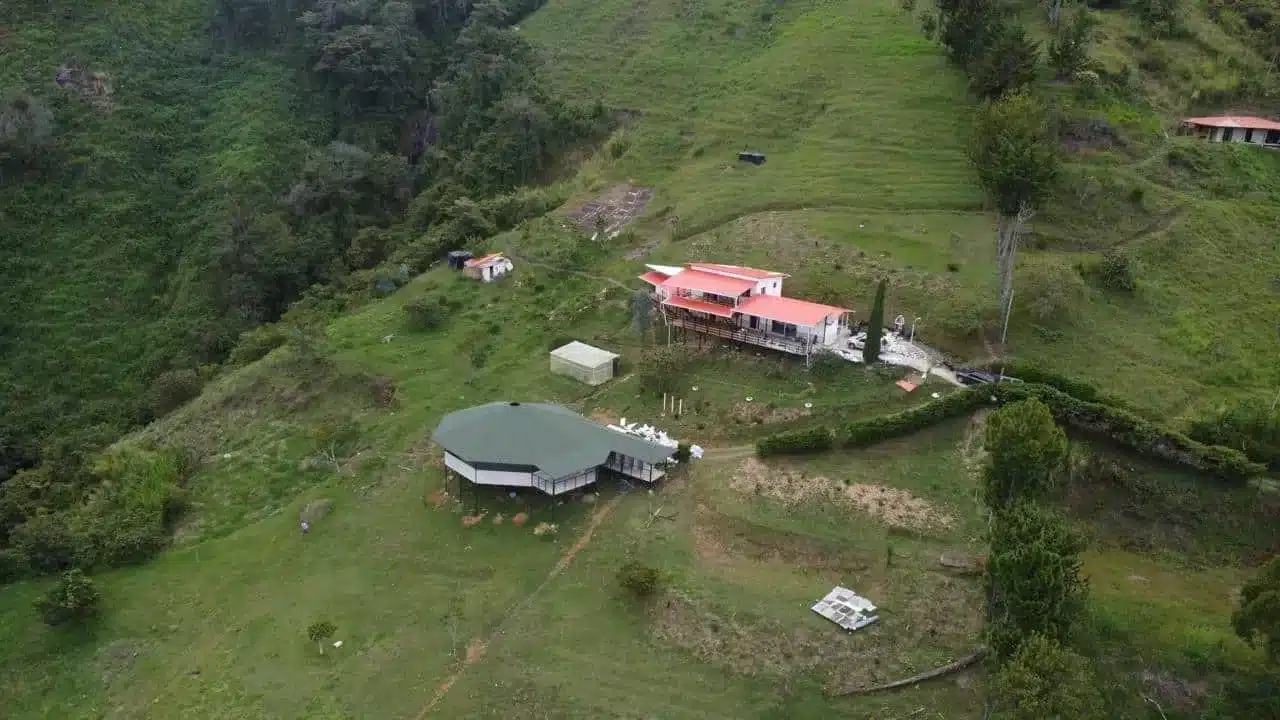
JFK has a direct flight into Medellín of about five and a half hours. The other thing you get by travelling is the one New York struggles to provide, which is space and a small enough group to be seen in. We run our retreats about fifty-five minutes outside the city, and formats and costs are on ayahuasca retreats, with a comparison of centres at best ayahuasca retreats.
Before any of the logistics, work through the medical questions, which are on who should not do ayahuasca. And the night itself is a conversation you have with yourself, and the actions afterwards are yours. All the strength on your path.
FAQs
Is ayahuasca legal in New York?
No. DMT is a Schedule I hallucinogen under Public Health Law §3306 of the New York Public Health Law and Schedule I under federal law, and possession is a criminal offence. New York has no state exemption and no decriminalisation measure, and no New York city or county is known to have passed a deprioritisation resolution. Study bills introduced in Albany have not passed.
Are there ayahuasca ceremonies in NYC?
Yes, ceremonies run regularly in Brooklyn, Manhattan and the Hudson Valley, and all of them operate outside the law. The quality of the marketing in New York is unusually high, which is often mistaken for legitimacy. There is no licensing standard, so there is no external way to distinguish an experienced facilitator from an inexperienced one.
What should I ask a New York ceremony organiser?
Ask what would disqualify you from attending, how many participants there will be, and how many sober facilitators stay awake through the whole night. Ask where the medicine came from and who cooked it. Then ask what the plan is for a medical emergency, step by step. Group size relative to facilitator count is the specific weak point in New York, where space costs push rooms toward more people.
Is the Hudson Valley scene different from the city?
It tends to run smaller groups with more space and somewhat more experienced facilitators, which genuinely helps on the night. It operates on exactly the same legal footing as the city, with no licensing, no insurance and no inspection. The drive north is not a legal boundary.
How far is Colombia from New York?
Medellín is roughly a five-and-a-half hour direct flight from JFK, with no visa required for US passport holders. Colombia does not schedule yagé and recognises traditional practice constitutionally, which is what allows retreats there to operate openly and be medically staffed.
What does a retreat cost from New York?
Roughly 450 to 3,000 US dollars for the retreat, based on what we see across the centres we track as of 2026, plus a direct flight from JFK. That range overlaps with what a New York ceremony weekend costs, which surprises people. The difference is not the price, it is that a legal retreat can be insured, medically staffed and held to account. See ayahuasca retreat cost.

Oliver